1st WG1 INFOGUT Community Webinar
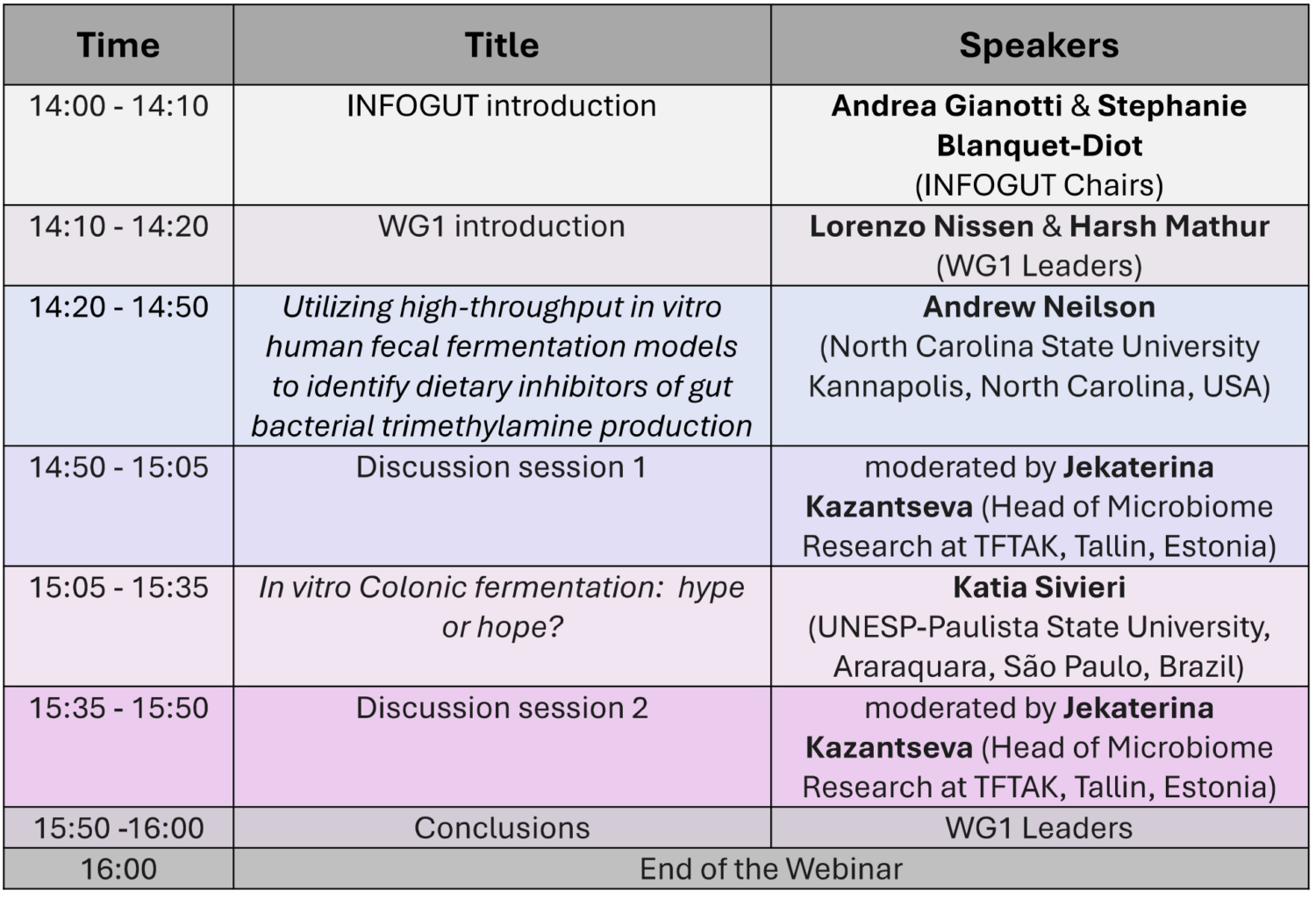
In vitro Colonic fermentation: hype or hope?
Speaker 1
Dr. Katia Sivieri Professor
Department of Food and Nutrition, Laboratory Study of Probiotics and Prebiotics, Faculty of PharmaceuticalSciences of Araraquara, UNESP-Paulista State University, Araraquara, Sâo Paulo, Brazil.
Abstract 1
In vitro colonic fermentation is a valuable tool for studying gut microbiota behavior and metabolite productionunder controlled conditions. While it offers important insights into diet— microbiota interactions, limitations such asthe lack of host—microbe interactions remain. This talk evaluates whether these models represent real promise orrequire cautious interpretation for predicting in vivo outcomes.
Speaker background 1
Dr. Katia Sivieri is an expert in gut microbiota, in vitro digestion and colonic fermentation models, with over 15years of research experience. Her work bridges basic and translational science, focusing on probiotics, prebiotics, bioactive compounds, and microbiota—host interactions. She has led numerous academic and industry-driven projects, contributing significantly to personalized nutrition and gut health research.
Title 2
Utilizing high-throughput in vitro human fecal fermentation models to identify dietary inhibitors of gut bacterialtrimethylamine production
Speaker 2
Dr. Andrew P. Neilson Professor
Plants for Human Health Institute, Department of Food, Nutrition and Bioprocessing Sciences, North CarolinaState University, Kannapolis, North Carolina, USA
Abstract 2
Elevated blood trimethylamine //-oxide (TMAO) levels are a risk factor for atherosclerosis development. The firststep in the TMAO pathway is release of trimethylamine (TMA) from dietary quaternary amines substrates by gutbacteria expressing TMA lyases. We have developed high-throughput human fecal fermentation models to studyinhibition of TMA production by dietary phenolics.
Speaker background 2
Dr. Neilson is a Professor at North Carolina State University. Dr. Neilson’s research focuses on interactions between dietary bioactives and the gut microbiome.. He is an associate editor for the journal Food & Function and a Fellow of the Royal Society of Chemistry (UK).